Just off the Columbia River Gorge highway in Oregon, there is a stop that feels unexpectedly prehistoric.
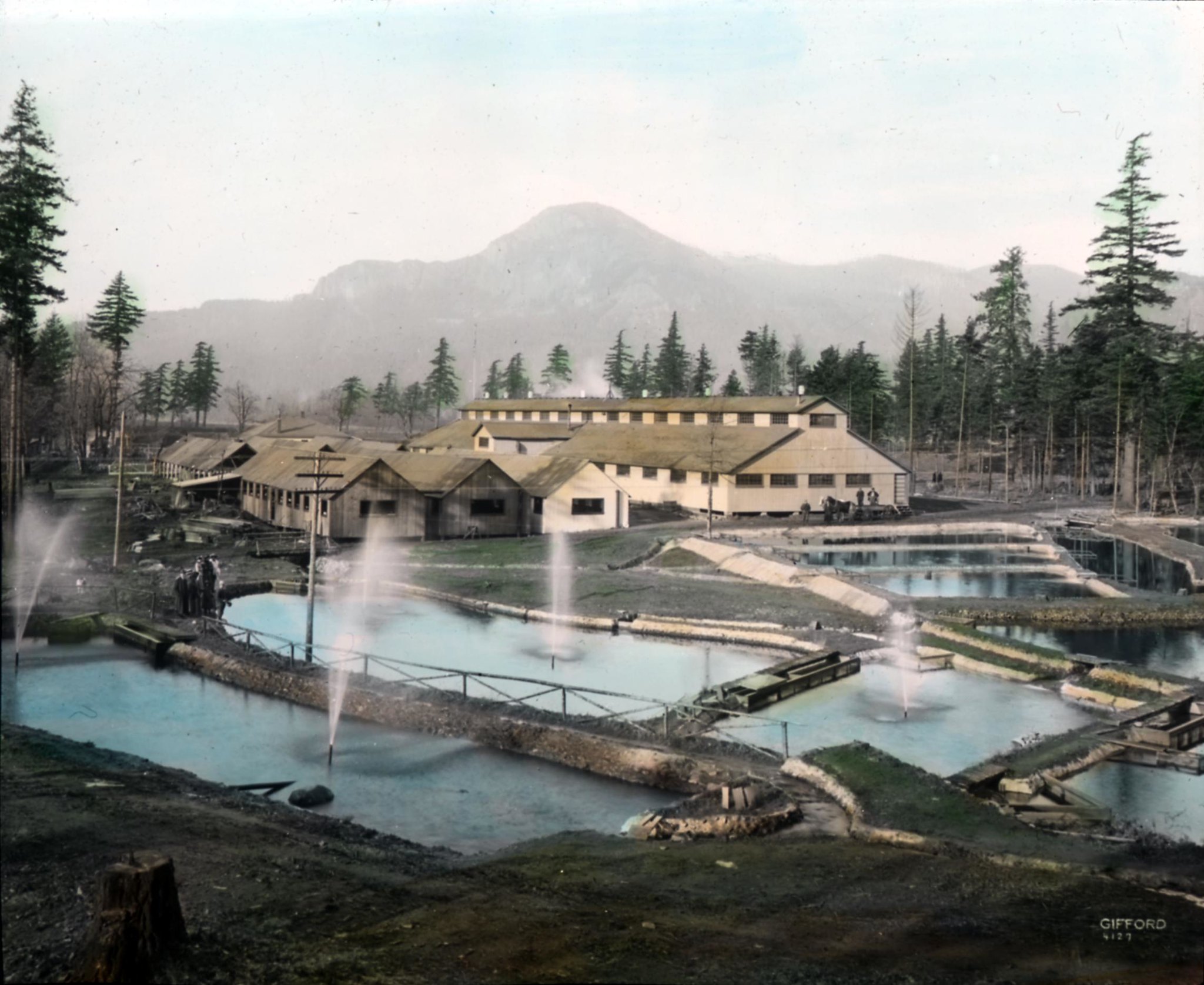
The Bonneville Fish Hatchery does not look particularly unusual at first. There is a small parking area, picnic tables, and a short walk toward a concrete pond where visitors gather along a metal railing. Some stay for only a few minutes. Others remain much longer, waiting for movement in the green water.
Eventually, something appears.

A long armored body drifts slowly past the viewing window. Plates along the back catch the light. The fish does not seem hurried. It rarely needs to be.
This is Herman — a white sturgeon that has become something of a regional legend.
White sturgeon are among the oldest surviving fish species on Earth. Individuals can live for more than a century and grow to remarkable sizes. Herman himself is estimated to be around ten feet long and weigh close to 500 pounds, though his exact age is uncertain. Determining the age of a sturgeon precisely is difficult without invasive examination, so most estimates remain educated guesses.

Over time, Herman has developed a reputation that goes well beyond wildlife curiosity. Earlier generations of the fish — there have been more than one Herman over the decades — were transported regularly to the Oregon State Fair, where crowds gathered simply to see a living prehistoric giant.
The fish’s history is not entirely peaceful. One Herman reportedly survived a kidnapping attempt decades ago when thieves removed him from his enclosure and dropped him nearby. He was found alive the next day.

Stories like this have helped turn the sturgeon into an unlikely cultural figure. Birthday celebrations are sometimes held at the hatchery, drawing visitors who line up beside the viewing tank just to catch a glimpse as he moves past.
For travelers exploring the Columbia River Gorge, encounters like this often change how the river itself feels. The landscape is known for waterfalls and scenic viewpoints, but the knowledge that ancient fish still move beneath the surface adds a quieter dimension to the experience.
Wild sturgeon continue to inhabit the Columbia River system. Anglers who seek them describe long, deliberate fights and a pace that feels different from most freshwater fishing. It is one of the reasons “Sturgeon fishing is one of the most rewarding experiences” people mention after spending time on this stretch of water.
Some visitors who first see Herman at the hatchery later choose to explore the river with regional fishing guide experts, learning about seasonal conditions and the importance of careful handling. White sturgeon grow slowly and are sensitive to stress, which is why catch-and-release practices have become an essential part of modern sturgeon fishing culture.
Back at the pond, the rhythm remains unhurried. Herman surfaces without warning, then disappears just as quietly. Children press their hands against the glass. Adults try to estimate his length. Conversations drift between curiosity and disbelief.
Not all unusual places are remote or dramatic. Some exist beside major highways, hidden in routines travelers barely notice. The Bonneville Fish Hatchery is one of them — a place where a brief stop can turn into a longer pause simply because something ancient moves slowly beneath the water.
Long after leaving the site, the Columbia River continues alongside the road, wide and opaque. It becomes difficult not to imagine what else is still down there, following migration routes older than the bridges above them.
Related Reads